


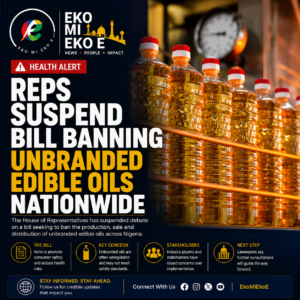
The House of Representatives has suspended further consideration of a bill seeking to prohibit the production, sale and distribution of unbranded edible oils across Nigeria, temporarily halting what could become a major regulatory change for the country’s food industry.
The proposed legislation was introduced as part of efforts to strengthen food safety standards, improve product traceability and protect consumers from potentially unsafe or substandard edible oils sold without proper branding or quality assurance.
Supporters of the bill argue that unbranded edible oils often lack adequate packaging, labelling and quality control measures, making it difficult for consumers to determine their origin, composition and compliance with health regulations. They believe stricter regulation would improve public health, reduce the circulation of unsafe products and encourage greater accountability within the edible oil industry.
However, during deliberations, lawmakers resolved to suspend debate on the bill to allow for broader consultations with key stakeholders. The decision is expected to provide an opportunity for manufacturers, distributors, consumer protection groups, public health experts and regulatory agencies to present their views before the proposed legislation proceeds further.
Industry stakeholders have expressed varying opinions on the proposal. While many support stronger food safety regulations, some have raised concerns about the potential economic impact on small-scale producers and traders who depend on the sale of locally processed edible oils. Others have called for policies that improve quality standards without disrupting livelihoods or increasing the cost of essential food items.
The suspension of the debate underscores the National Assembly’s intention to ensure that any eventual legislation reflects the interests of both consumers and businesses while addressing public health concerns. The outcome of the consultations is expected to shape the next stage of the legislative process and determine whether the bill is amended before returning for further consideration.
If eventually passed into law, the legislation could significantly transform the edible oil sector by introducing stricter production, packaging and distribution standards, while enhancing consumer confidence in products available across the Nigerian market.