
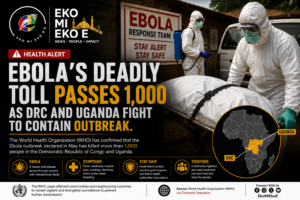
The Ebola outbreak in the Democratic Republic of Congo (DRC) and Uganda has claimed more than 1,000 lives, marking one of the deadliest public health emergencies in the region in recent years, according to the World Health Organization (WHO).Declared in May, the outbreak continues to challenge health authorities, who are intensifying surveillance, treatment, contact tracing and community engagement in a bid to halt further transmission of the virus.Ebola is a severe and often fatal viral disease spread through direct contact with the blood or bodily fluids of infected people or animals. Early symptoms include fever, fatigue, muscle pain, vomiting and diarrhoea, while severe cases may result in internal and external bleeding.The WHO has urged governments, healthcare workers and communities across the region to remain vigilant and comply with recommended public health measures. It also emphasised the importance of early detection, rapid isolation of cases and cross-border collaboration to prevent the outbreak from spreading further.As emergency response teams continue their work on the ground, global health agencies are closely monitoring the situation and supporting efforts to contain the outbreak.