


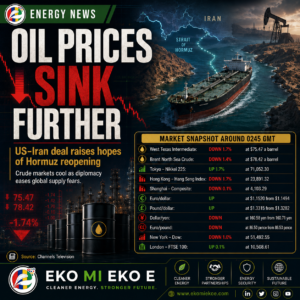
Oil prices slipped further on Thursday as global markets reacted to a reported agreement between the United States and Iran aimed at ending months of tension and reopening the Strait of Hormuz.
The development eased some of the supply fears that had kept crude prices under pressure in recent weeks, as traders assessed the possibility of smoother oil movement through one of the world’s most important energy routes.
The Strait of Hormuz remains a critical passage for global crude shipments, and any threat to its operation usually sends shockwaves through oil markets. With the new deal raising hopes of renewed access and reduced geopolitical risk, investors moved quickly to adjust their positions.
Around 0245 GMT, West Texas Intermediate was down 1.7 percent at $75.47 a barrel, while Brent North Sea Crude fell 1.4 percent to $78.42 a barrel.
Market Snapshot Around 0245 GMT
Oil
West Texas Intermediate: Down 1.7 percent at $75.47 a barrel
Brent North Sea Crude: Down 1.4 percent at $78.42 a barrel
Asian Markets
Tokyo – Nikkei 225: Up 1.7 percent at 71,052.30 at the break
Hong Kong – Hang Seng Index: Down 1.7 percent at 23,891.32
Shanghai – Composite: Down 0.1 percent at 4,103.29
Currencies
Euro/dollar: Up at $1.1520 from $1.1494 on Wednesday
Pound/dollar: Up at $1.3315 from $1.3282
Dollar/yen: Down at 160.58 yen from 160.71 yen
Euro/pound: Down at 86.50 pence from 86.53 pence
Other Major Markets
New York – Dow: Down 1.0 percent at 51,492.55 at close
London – FTSE 100: Up 0.1 percent at 10,508.61 at close
The wider market movement shows how strongly investors are responding to the possibility of reduced tension in the Middle East. While oil prices moved lower on hopes of improved supply flow, equities and currencies delivered a mixed performance as traders weighed the broader economic impact.
For weeks, fears over possible disruption in the Gulf had supported higher crude prices and added to concerns about inflation and energy costs. Now, with investors seeing a possible reduction in regional tension, the mood has shifted from fear of supply disruption to cautious relief.
However, analysts believe prices may not fully settle immediately. Even if the Strait of Hormuz reopens, shipping confidence, insurance costs, security guarantees and the pace of resumed crude movement could still influence prices in the coming days.
For Nigeria, the development carries both positive and negative implications. Lower crude prices could ease pressure on global fuel costs and inflation, but they may also affect oil revenue expectations for a country that still depends heavily on crude exports for foreign exchange and government earnings.
The latest price movement shows once again that global energy markets can turn sharply when diplomacy, conflict and supply routes collide.]
Source: Channels Television