
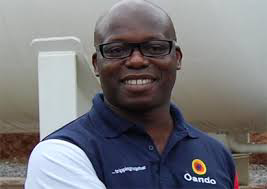
The Group Chief Executive Officer of Oando Plc, Wale Tinubu, has revealed that the oil company is collaborating with the Lagos State Government to introduce 5,000 electric buses for public transportation in the state.
Tinubu shared this information during an interview with CNBC Africa at the recently concluded World Economic Forum in Davos, Switzerland.
He explained that the decision to invest in electric vehicles, particularly for public transport, is driven by the company’s commitment to embracing cleaner energy solutions as part of its “just” energy transition strategy.
He made a case for a “just transition” over decarbonisation in Africa, stating that the continent “is actually a victim of global warming,” suffering the effects of climate change while contributing only about 3% of global emissions.
He emphasized that Africa cannot abandon its vast fossil fuel reserves in favor of clean energy sources while much of its population remains in energy poverty.
“The arguments for decarbonisation are as important as the arguments for a just transition, and that transition has to recognize the fact that Africa has 45% of the people who have no access to electricity or energy products so our first step really must be to use what we need, which means that we need to use our gas as part of the energy mix to service the needs of our continent and that we need to do so as a transitional fuel whilst we work with an energy mix.”
He pointed out that Oando, as a key player in Nigeria’s oil and gas industry, is deploying electric vehicles as a “carbon capture technique” to support global decarbonisation efforts.
“For every modicum of carbon we put into the economy, into the world and the environment, we are also taking that out by ensuring that we have carbon capture techniques as well as ensuring that our clean energy offering to as part of our products and services is high so we’re focusing a lot on e-vehicles,” he explained.
He further shared that the company will deploy 5,000 electric buses in Lagos as part of its effort to help Nigeria transition its public transport system from combustion engines to electric vehicles.
“We are using gas as a transitional fuel to create electricity to generate the power to power buses, transport is 10% of global emissions so if we tackle public transport we would be able to reduce emissions by 5% almost immediately and the first step we’re doing now is also working on a public system of being able to transit the bus system in Nigeria from diesel or petrol to electric vehicles starting with a project which we’re working on with the Lagos state government as a pilot case where we expect to see up to 5,000 buses, e-buses being deployed in our streets.”
Oando to deploy AI in next oil drilling campaign
Tinubu also mentioned the potential use of artificial intelligence in the company’s next drilling campaign, as part of its efforts to enhance operational efficiency through technology.
He explained that deploying AI is becoming essential for better resource utilization and improving overall performance in Oando’s upcoming projects.
“It (AI) is a big game-changer. For example in our drilling operations, we have to make serious decisions which have a high impact on cost. And being able to throw in all the potential answers to our questions based on old experiences, by having a whole sequence of possibilities which can be taken through artificial intelligence. So it is something we are looking forward to deploying in our next drilling campaign,” he stated.