
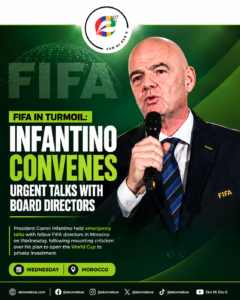
Fresh questions have emerged over the future direction of world football after FIFA President Gianni Infantino reportedly held emergency talks with members of the organisation’s leadership in Morocco amid growing criticism surrounding a proposal that would have opened the FIFA World Cup to private investment.
According to reports, the closed-door discussions were convened after the proposed investment model attracted widespread scrutiny from stakeholders across the football community. Although the initiative has now been shelved, the controversy has intensified debate over FIFA’s commercial strategy and how future global tournaments should be financed.
The proposal had generated mixed reactions from football administrators, investors, and fans. Supporters argued that private investment could unlock significant funding for infrastructure development, grassroots football, technological innovation, and the continued global expansion of the sport. Others, however, warned that allowing external investors into the World Cup could compromise football’s independence and place commercial interests ahead of sporting integrity.
The emergency meeting reflects the pressure facing FIFA’s leadership as the governing body attempts to balance financial sustainability with the expectations of its member associations and millions of football supporters worldwide. While no official policy changes have been announced following the discussions, the meeting signals that the issue remains one of the organisation’s highest priorities.
Football governance has increasingly come under the spotlight in recent years as the sport continues to evolve into a multi-billion-dollar global industry. From broadcasting rights and sponsorship agreements to competition formats and investment structures, FIFA faces growing expectations to remain transparent while safeguarding the long-term interests of the game.
Industry observers believe the outcome of these internal discussions could influence future reforms within FIFA and shape how major international tournaments are managed in the years ahead. Whether the governing body revisits the idea of private investment or pursues alternative funding models, the decisions made by FIFA’s leadership will likely have far-reaching implications for football across every continent.
For now, the proposed investment plan remains on hold, but the debate surrounding the commercial future of the FIFA World Cup is far from over.