

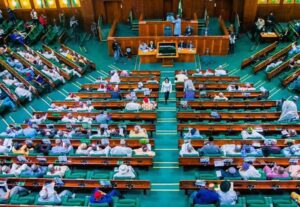
The House of Representatives has commenced an investigation into ₦432.07 billion in outstanding petroleum-sector obligations, as lawmakers seek answers over unpaid revenues owed to the Nigerian Midstream and Downstream Petroleum Regulatory Authority (NMDPRA).
The probe is being conducted by the House Public Accounts Committee (PAC) following findings contained in the Auditor-General’s reports on outstanding obligations involving the Nigerian National Petroleum Company Limited (NNPCL) and oil companies.
The liabilities reportedly include unpaid obligations linked to Balancing Allowance, National Transport Average, the one per cent Midstream and Downstream Gas Infrastructure Fund, as well as legacy debts connected to importation, coastal and credit transactions.
The Auditor-General’s 2023 report had put the combined indebtedness of NNPCL and affected oil companies at ₦392.73 billion. NNPCL accounted for approximately ₦162.46 billion, while oil companies under industry groups including DAPPMAN, MOMAN and MEMAN accounted for about ₦230.27 billion.
The 2024 audit report subsequently placed the liabilities under review at ₦432.07 billion, highlighting the continued accumulation of unpaid obligations within the petroleum sector.
Further submissions before the committee indicated that 146 oil companies owed NMDPRA about ₦327.53 billion as of 2025, with some of the outstanding obligations reportedly dating back several years.
The lawmakers are expected to examine how the debts accumulated, the records supporting the amounts claimed, payments that may have already been made, outstanding balances and the steps taken by the relevant authorities to recover the funds.
The investigation also comes amid growing concerns over Nigeria’s ability to effectively collect government revenues from the oil and gas sector. With billions of naira reportedly outstanding, the probe could put pressure on regulators, NNPCL and affected companies to provide clear explanations and documentation.
For the House, the objective is not only to establish the actual amount owed but also to determine why the money remains outstanding and what can be done to recover funds due to government.
As the investigation unfolds, Nigerians will be watching closely to see whether the exercise results in actual recovery of the outstanding revenue and stronger accountability within the petroleum industry.
The big question: How much of the ₦432 billion can government recover, and why was such a huge amount allowed to remain outstanding for so long?