


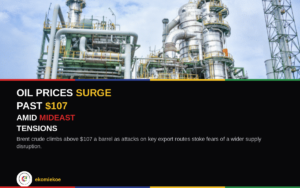
Global oil prices have climbed above $107 per barrel, with escalating tensions in the Middle East fuelling concerns that disruptions to major energy routes could tighten crude supplies.
The latest increase has intensified pressure on the international oil market, as investors and energy traders assess the potential impact of attacks on energy infrastructure and growing security threats around important oil and shipping corridors.
The surge in prices reflects fears that the current situation could develop into a broader supply disruption if critical export and transportation routes remain affected.
WHY THE MARKET IS WORRIED?
The Middle East remains central to global energy supplies, making any disruption to oil production, storage or transportation a major concern for international markets.
Recent attacks and heightened tensions around key routes have increased uncertainty over the movement of crude from major producing countries to international buyers.
The possibility of prolonged disruptions has pushed traders to factor greater geopolitical risk into oil prices, contributing to the latest jump in Brent crude.
WHAT IT MEANS FOR THE GLOBAL ECONOMY?
A sustained increase in crude prices could have consequences far beyond the oil industry.
Higher oil prices generally increase the cost of producing and transporting goods, while also putting pressure on petrol and other refined petroleum products.
Countries that import large quantities of crude or refined petroleum products could face additional pressure on their foreign-exchange requirements and inflation levels if the price increase continues.
Businesses, airlines, transport operators and consumers could also feel the impact if higher energy costs are passed through to the wider economy.
IMPLICATIONS FOR NIGERIA?
As a major oil-producing country, Nigeria could benefit from stronger international crude prices through increased export earnings and potentially higher government revenue.
However, higher global oil prices do not automatically translate into greater economic gains. Nigeria’s actual benefit will depend on factors including crude production, export volumes, domestic petroleum consumption, exchange rates and the overall stability of the global market.
The development is therefore a mixed picture for the Nigerian economy: higher crude prices can improve earnings from oil exports, while increased global energy costs can also create wider economic pressures.
MARKETS WATCH THE NEXT MOVE?
For now, the direction of oil prices will depend heavily on how the Middle East situation develops.
Any further attacks on energy infrastructure or disruption to major shipping routes could push prices even higher, while a reduction in tensions and restoration of affected routes could ease some of the pressure.
With Brent crude now trading above the $107 mark, global markets are watching closely to determine whether the latest price surge will be temporary or the beginning of a more prolonged period of elevated oil prices.
Eko Mi Eko E will continue to monitor the situation and bring you updates as developments unfold.