


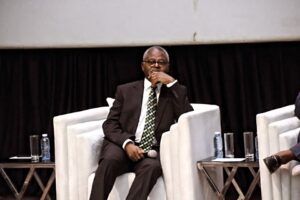
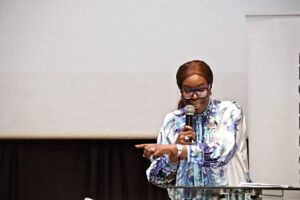


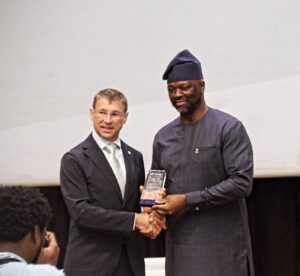


The Lagos State Government is intensifying its focus on structured Public-Private Partnerships (PPP) as a strategic pathway to tackle the state’s housing and infrastructure deficit while unlocking new opportunities for investment.The Commissioner for Commerce, Cooperatives, Trade and Investment, Mrs. Folashad Bada Ambrose-Medebem, stated that the scale of the infrastructure challenge requires stronger collaboration between government and the private sector.She made the remarks while delivering a keynote address at a Julius Berger event, where she highlighted the need for innovative approaches to financing and delivering infrastructure across Lagos.According to the Commissioner, the housing and infrastructure gap remains one of the sharpest social challenges confronting the country. At the same time, she described the gap as a major commercial opportunity capable of attracting significant private investment into the Nigerian economy.For Lagos, the need for additional housing and infrastructure continues to grow alongside the state’s expanding population, business activity and urban development. This makes efficient infrastructure delivery increasingly important to the state’s economic competitiveness and quality of life.Ambrose-Medebem emphasised that structured PPP arrangements can provide a framework for government and private investors to combine resources, expertise and financing to deliver projects with long-term value.Rather than relying solely on public funding, PPP models can allow the private sector to participate more directly in the development and management of infrastructure, while government provides the necessary policy direction, regulatory framework and institutional support.The Commissioner’s position also reflects the growing importance of private capital in meeting Nigeria’s infrastructure needs. With government resources facing competing demands, attracting responsible long-term investment could help accelerate the delivery of projects while creating opportunities for businesses operating across construction, housing, finance, engineering and related sectors.For Lagos, stronger partnerships with the private sector could support the development of more housing, commercial infrastructure and other facilities required to keep pace with the state’s rapid growth.The emphasis on PPP also places investment and economic development at the centre of the conversation around closing Lagos’ infrastructure gap. If properly structured and implemented, such partnerships could help transform infrastructure needs into opportunities for job creation, business expansion and sustainable development.The Commissioner therefore called attention to the importance of creating an environment where government and private-sector stakeholders can work together effectively to deliver projects that respond to the needs of Lagos residents while generating long-term economic value.As Africa’s economic hub continues to attract businesses, investors and residents, the ability to expand infrastructure alongside population and economic growth remains critical.The Lagos State Government’s renewed emphasis on structured PPPs signals its intention to make private-sector participation an important part of that process.