

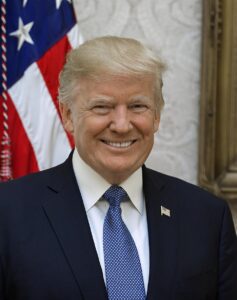
U.S. President Donald Trump has suggested renaming the Strait of Hormuz as “Trump Strait,” drawing fresh global attention to one of the world’s most strategically important waterways and a major route for international oil shipments.
The Strait of Hormuz, located between Iran and Oman, connects the Persian Gulf with the Gulf of Oman and the Arabian Sea. It is one of the most important maritime corridors in the global energy trade, with large volumes of crude oil and other petroleum products passing through the waterway.
Trump’s proposal comes against the backdrop of continuing geopolitical tensions in the Middle East, where the Strait of Hormuz remains a key point of strategic and economic importance.
Because of its role in international energy supplies, developments around the strait are closely monitored by governments, oil producers, shipping companies, investors and global markets. Any major disruption to traffic through the waterway could have consequences for energy prices, shipping costs and the wider global economy.
The suggestion to call the waterway “Trump Strait” has consequently attracted attention beyond the issue of its name. It has also reignited conversations about the strategic significance of the waterway and the political tensions surrounding the region.
However, despite Trump’s suggestion, the internationally established name of the waterway remains the Strait of Hormuz.
The proposed name change has also generated reactions online, with many questioning whether such a move could gain any formal international recognition or remain simply a political statement.
For now, the Strait of Hormuz continues to retain its established name, while President Trump’s unusual proposal adds another talking point to the already intense geopolitical discussions surrounding the strategically vital waterway.