


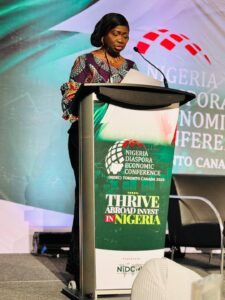







Nigeria is intensifying its push for greater diaspora investment as government officials, business leaders, investors and Nigerians living abroad converge in Toronto, Canada, for a major conference focused on unlocking new economic opportunities for the country.
The gathering is positioning Nigeria’s large global diaspora not simply as a source of remittances, but as a potential pool of capital, professional expertise, business networks and international partnerships capable of contributing to the country’s economic development.
Opening the conference, Chairman of the Nigerians in Diaspora Commission (NiDCOM), Abike Dabiri-Erewa, highlighted the importance of strengthening engagement between Nigeria and its citizens living overseas.
She described the conference as an opportunity to encourage Nigerians abroad to take a more active role in the country’s development by investing capital, sharing expertise and building stronger commercial connections with businesses and institutions at home.
Nigeria has one of Africa’s largest diaspora populations, giving the country access to an extensive international network of professionals, entrepreneurs and investors. Harnessing that network effectively could provide opportunities across sectors including technology, agriculture, infrastructure, healthcare, real estate, manufacturing and the creative economy.
The conference is therefore expected to serve as a platform for discussions around investment opportunities, partnerships and measures required to improve confidence among Nigerians abroad considering investments in the country.
The opening of the event was, however, accompanied by controversy after Dabiri-Erewa disclosed that some Nigerian dignitaries invited to participate were denied Canadian visas, including the Governor of Plateau State.
Despite the visa issue, discussions at the conference remain centred on strengthening economic ties between Nigeria and its diaspora community and translating those relationships into sustainable investments and development opportunities.
For Nigeria, attracting diaspora capital goes beyond encouraging financial inflows. Building investor confidence, improving the business environment and creating transparent pathways for Nigerians abroad to participate in domestic opportunities will be crucial if the country is to convert diaspora interest into long-term investment.
The Toronto gathering provides another opportunity for Nigeria to present its economic potential to an international audience while encouraging its citizens abroad to play a larger role in shaping the country’s development.