


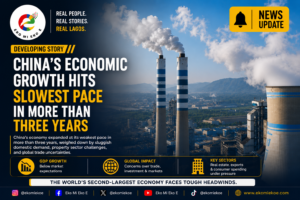
China’s economy has expanded at its slowest rate in more than three years, underscoring the growing economic challenges facing the world’s second-largest economy and raising fresh concerns about the outlook for global growth.
Recent economic data point to weakening domestic demand, continued difficulties within the country’s property sector, softer consumer spending, and persistent external trade pressures. Together, these factors have contributed to a slowdown that analysts say could have significant implications beyond China’s borders.
As one of the world’s largest manufacturing hubs and a major trading partner for countries across Asia, Africa, Europe, and the Americas, China’s economic performance plays a critical role in global supply chains, commodity markets, investment flows, and international trade. Any prolonged slowdown could influence demand for raw materials, shipping activity, manufacturing output, and financial market sentiment worldwide.
Economists believe Chinese authorities may introduce additional fiscal and monetary measures to stimulate investment, encourage consumer spending, and stabilise key sectors of the economy. Investors and policymakers around the world will be watching closely for further policy announcements and economic indicators in the coming weeks.
For developing economies, including many African nations with strong trade ties to China, the pace of China’s economic recovery remains an important factor in determining export demand, infrastructure investment, and broader economic cooperation.
While China’s economy continues to grow, the latest figures highlight the complex challenges facing policymakers as they seek to balance long-term structural reforms with the need to support short-term economic activity.