


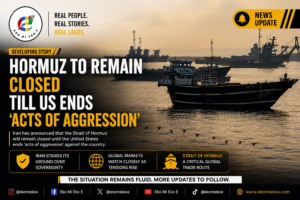
Heightened tensions in the Middle East have once again drawn global attention to the Strait of Hormuz, one of the world’s most strategically important maritime corridors.
Iran has stated that the Strait of Hormuz will remain closed until the United States ends what it describes as “acts of aggression,” a declaration that has intensified concerns over regional security and the stability of global energy supplies.
The Strait of Hormuz serves as the primary transit route for a significant portion of the world’s crude oil and liquefied natural gas exports. Every day, millions of barrels of oil pass through the narrow waterway, making it a vital artery for international commerce. Any disruption to maritime traffic in the region has the potential to affect oil prices, global shipping costs, supply chains, and financial markets.
The latest statement comes amid growing geopolitical tensions in the region, prompting governments, international organisations, shipping companies, and investors to closely monitor developments. Analysts warn that any prolonged restriction or escalation could have far-reaching consequences beyond the Middle East, particularly for energy-importing nations.
While diplomatic efforts continue, uncertainty remains over how the situation will evolve in the coming days. Global markets are expected to react to any significant developments affecting freedom of navigation through the Strait.