


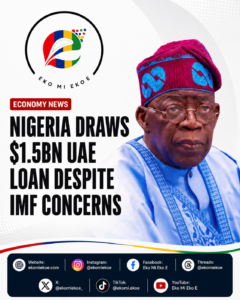
Nigeria has reportedly drawn about $1.5bn from a wider $5bn financing arrangement with First Abu Dhabi Bank, the largest lender in the United Arab Emirates.
The facility, according to reports, was accessed in recent weeks as the first tranche of a structured financing deal approved for the Federal Government.
The transaction is said to have been carried out through a total return swap, a form of derivatives-based financing that allows a government or borrower to receive funding while taking on certain financial risks linked to the underlying arrangement.
The development comes despite earlier concerns raised by the International Monetary Fund over the structure of the deal.
The IMF had warned that such financing arrangements can be complex and opaque, making it important for governments to clearly disclose the terms, risks, repayment obligations and possible implications for public debt.
The deal has also attracted scrutiny because Nigeria is already facing significant fiscal pressure, including rising debt-service costs, foreign exchange challenges, revenue constraints and growing demands for infrastructure and social spending.
For the Federal Government, the $1.5bn drawdown is expected to provide short-term budgetary support and help ease immediate financing pressure.
However, the move has renewed debate over Nigeria’s borrowing strategy and the country’s increasing reliance on external financing to support government spending.
Supporters of the facility may argue that the loan provides necessary liquidity at a time when the government needs funds to stabilise its finances, support reforms and meet budget obligations.
Critics, however, are likely to question the transparency of the arrangement, the cost of repayment, and whether Nigeria is taking on another layer of debt exposure at a time when citizens are already dealing with inflation, high living costs and economic uncertainty.
The financing arrangement also places fresh attention on the government’s debt management approach, especially as international institutions continue to advise Nigeria to improve revenue generation, strengthen transparency and reduce dependence on borrowing.
As the country moves ahead with the deal, analysts say the key questions will be how the funds are used, how clearly the terms are disclosed, and whether the borrowing will translate into real economic relief for Nigerians.
The development remains one of the major economic stories to watch as Nigeria continues to navigate fiscal reforms, debt obligations and pressure to stabilise the economy.